The QRHub blog.
Ideas, stories, and practical guides for a more connected world.
More connections.
Start with a link: getting your first QR code right
More than generating an image: pick the content type, check the destination, download the file and test it on real material, so the first scan works end to end.

Static or dynamic QR codes: what you are really choosing
Will the pattern change, can the link be updated, where do the numbers come from? One visit path that separates the three questions people mix up most.

Good looks, good scans: the design limits of a branded QR code
Put the brand into the colors, the margins and the layout around the code instead of the code area, and build reusable acceptance rules for logos, gradients and print.
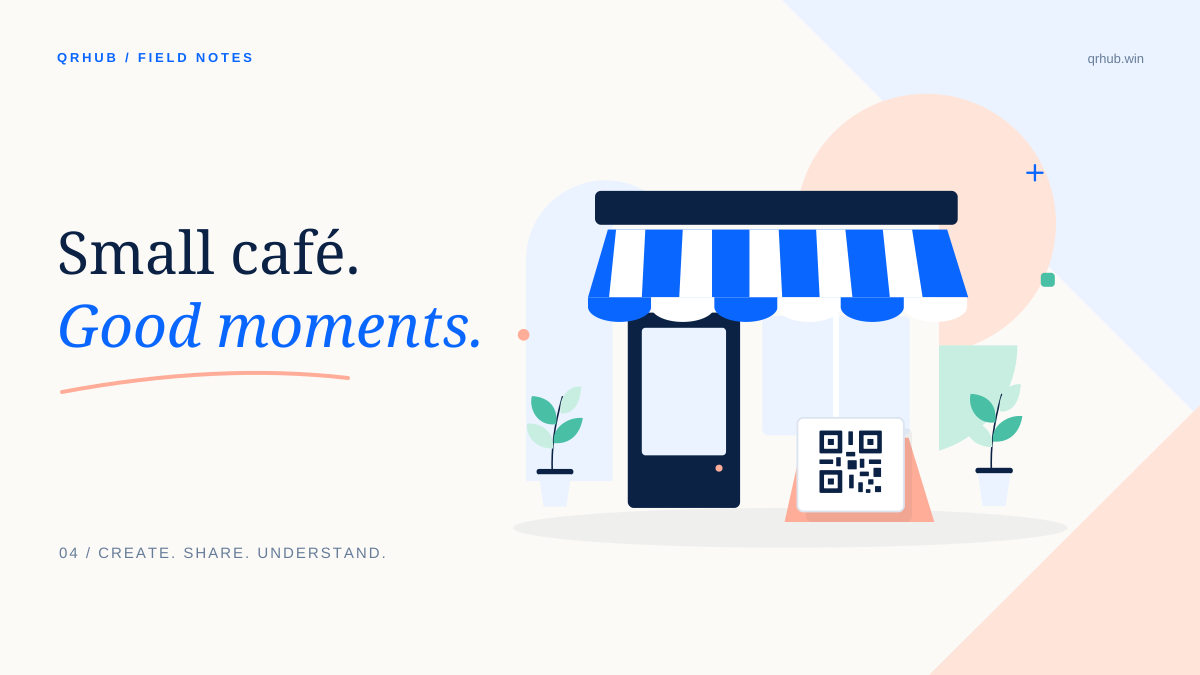
A cafe’s scan journey: from the menu to a return visit
Menu, table card, takeaway cup and guest network, each doing one job. A fictional store example for designing scans that do not pester customers.

Batch QR codes: turn a spreadsheet into a maintainable asset
Prepare the data, map the fields, find the failures, organize the exports. Batch creation is not just generating a lot of codes; it is keeping every row traceable afterwards.

Reading QR code data: how to analyze one code and a whole batch
Settle what you are analyzing and how the numbers are counted before reading trends — and why scans are not people and unique visitors cannot simply be added up.

Event QR codes in practice: keep sign-up, arrival and materials apart
A public event code is not an admission pass. Across the before, during and after stages, give each QR code one clear job.

Business cards, WiFi and contact entry points: type less, connect more
Tell “save a copy of this information” apart from “open a page you can update”, pick the right form for contacts and guest networks, and do not mistake convenience for secrecy.

Make product packaging an entry point: guides, after-sales and print checks
Start from the real questions someone has when they open the box, organize the destinations, and check size, material and long-term maintenance before production.

Sharing QR codes safely: security notes, reports and privacy
Keep trustworthy destinations, account verification, content review and data notes separate. No tracking cookies still does not mean no data processing at all.
What resolution a printed QR code needs to scan
A QR code that will not scan is often not drawn wrong but printed at a size and resolution that do not match. This piece covers size, quiet zone and material to avoid the common scannability traps.
How much text a QR code can hold
The capacity ceiling follows from the encoding mode together with the error correction level. Using Chinese text and links as the two common cases, this piece shows how to estimate it and what to trade off near the limit.
How dynamic QR codes relate to short links
The redirect that happens after the scan is where dynamic QR codes and short links genuinely meet. This piece separates the two layers of addressing and shows when a dynamic code helps and when a static one is simpler.